
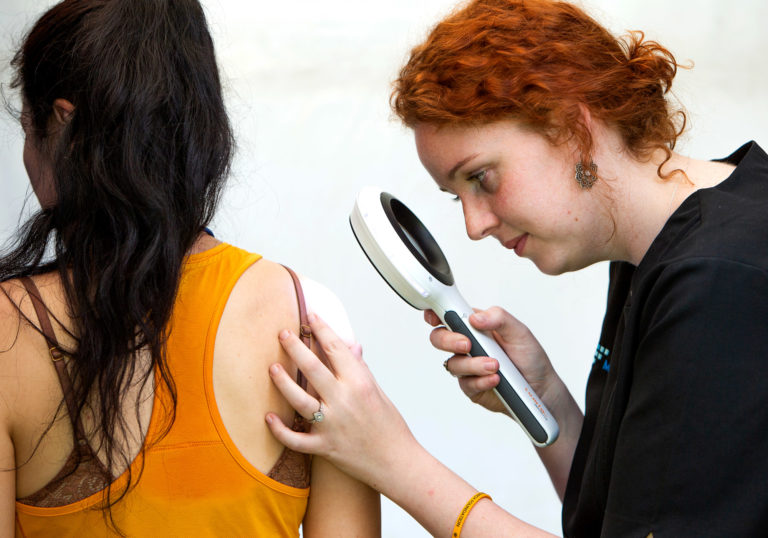
What is melanoma?
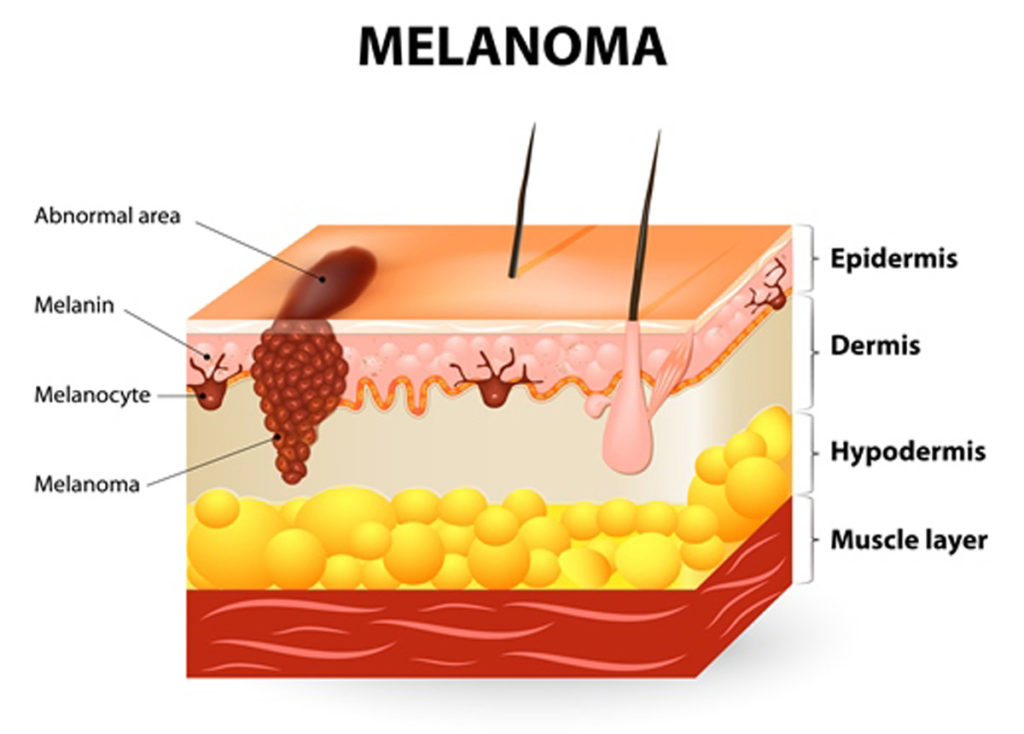
Melanoma is one of the three main types of skin cancer and begins in the cells of the skin called melanocytes. Melanocytes produce a dark pigment (melanin) which helps protect the deeper layers of the skin from ultraviolet radiation.
The amount of pigment that is produced varies with skin type, but any skin type can develop melanoma. It is when the melanocytes produce melanin in an unregulated or uncontrolled way that melanoma can develop. Melanoma can arise on areas of the skin that are not exposed to the sun.
As a melanoma begins to grow it is initially confined to the top layers of the skin, however, if left untreated can spread quickly through the deeper layers where it can then enter the lymphatic system or blood stream and travel to almost any part of the body. When this spreading occurs, the melanoma can quickly become life threatening if left untreated.
Development of melanoma
Ultra-violet (UV) radiation from sunlight (and tanning beds) plays a significant role in the development of melanoma and other skin cancers. Research has found that the rates of melanoma in Australia are higher near the coastline and it is reasoned that this is due to lifestyle factors, outdoor activity and greater sun exposure. The rates are also higher in Australia’s northern states due to the intensity of the sun.
Types of melanoma
Superficial Spreading Melanoma
Approximately 70% of all diagnosed melanomas. It usually occurs in a previously non-cancerous mole. In the early stages, it may look like a freckle or mole that is spreading sideways. Over time it can change in colour, itch or develop irregular borders.
Nodular Melanoma
Accounting for around 15% of diagnosed melanomas, it is also the most aggressive. It may appear where a mole or lesion did not exist before. They tend to be darkly pigmented and spread rapidly in depth.
Acral Lentiginous Melanoma
Also called Subungual melanoma, this type only accounts for around 5% of melanomas but makes up 50% of melanomas in those with dark skin. Most commonly found on the palms of the hands, soles of the feet or under finger and toe nails. In the early stages it is often mistaken for a bruise, blood blister or streak in the nail.
Lentigo Maligna Melanoma
Accounts for around 10% of melanomas and often occurs on the face of middle aged to elderly persons who have suffered sun damage. For this reason it often mistaken for sunspots and goes undiagnosed or untreated making it very dangerous. It often has very irregular borders and varying shades of brown or black.
Amelanotic Melanoma
Literally means “without melanin”, which is what gives other melanomas their darker colour. They can appear as a lesion with little or no colour, pink or scar-like. Any lesion that is scar-like or appears next to a previously treated melanoma should be examined immediately.
Ocular/Uveal Melanoma
This rare and often aggressive type of melanoma occurs within the eye. It arises from the melanocytes that give the eye its colour. Symptoms of can include blurred vision, flashing lights and shadows. However, it is not uncommon for a patient to experience no symptoms and be diagnosed during a routine eye check. The best strategy for prevention is to wear UV protective sunglasses and a broad brimmed hat.
Mucosal Melanoma
Mucosal Melanoma is also rare and accounts for only 1% of all melanomas. As with the skin, melanocytes are present in the mucosal surfaces of the body which line areas such as the sinuses, oral cavity, vagina, bowel and anus. Unlike melanoma of the skin, mucosal melanoma is not linked to sun/UV exposure. Because of location, many mucosal melanomas go undiagnosed and are often quite advanced once identified.
Melanoma Statistics in Australia
Melanoma is often described as Australia’s National Cancer due to its high incidence and our sun exposure. Australia has one of the highest rates of melanoma in the world.
- 1 person dies every 6 hours from melanoma.
- Melanoma is the third most common cancer in Australia.
- Melanoma is the most common cancer in young Australians (20–39 year olds).
- If detected early more than 90%of melanoma cases can be successfully treated.
- Melanoma rates doubled in the 20 years between 1986 and 2006 and continue to rise. By 2030, a further 14,000 Australians will die, while 205,000 will be diagnosed with the disease.
Find out more

What to look for
An easy way to detect potentially harmful moles or lesions is to use the ABCDE guidelines.
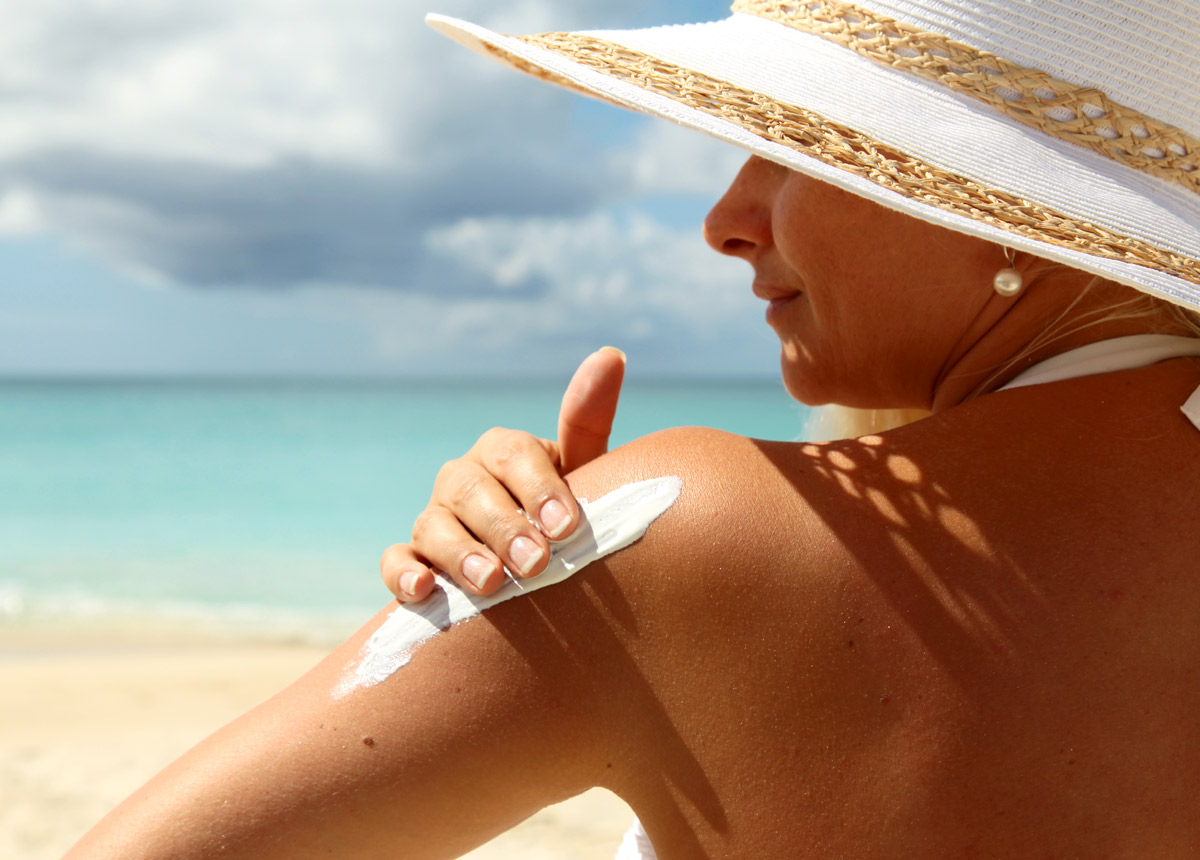
Prevention and Early Detection
Catching a melanoma early can save lives. Reducing your UV exposure can prevent melanoma.
Treatment
Read our general overview of current treatment options. Always speak with a health professional for the best advice about your circumstances.