

2026 Research Awards
Congratulations to our successful applicants in the 2026 funding round. These awards are made possible by the generosity of our community, helping turn promising research into real-world outcomes that save lives.
The Maureen Ellen James Memorial Award
Suzanah Boyd
Macquarie University
Early Career Researcher Award
Dr Douglas Gaskarth
Monash University
Post Graduate Scholar Award
Laura Smith
Melanoma Institute Australia
The John Walter Holland Memorial Award
Rachael Stone
Adelaide University

“We hope this research brings us one step closer to our shared goal of zero deaths from melanoma by helping identify patients at the highest risk of recurrence earlier, enabling more personalised care and ultimately improving patient outcomes.” – Suzanah Boyd
Suzanah Boyd
Maureen Ellen James Memorial Award
Macquarie University
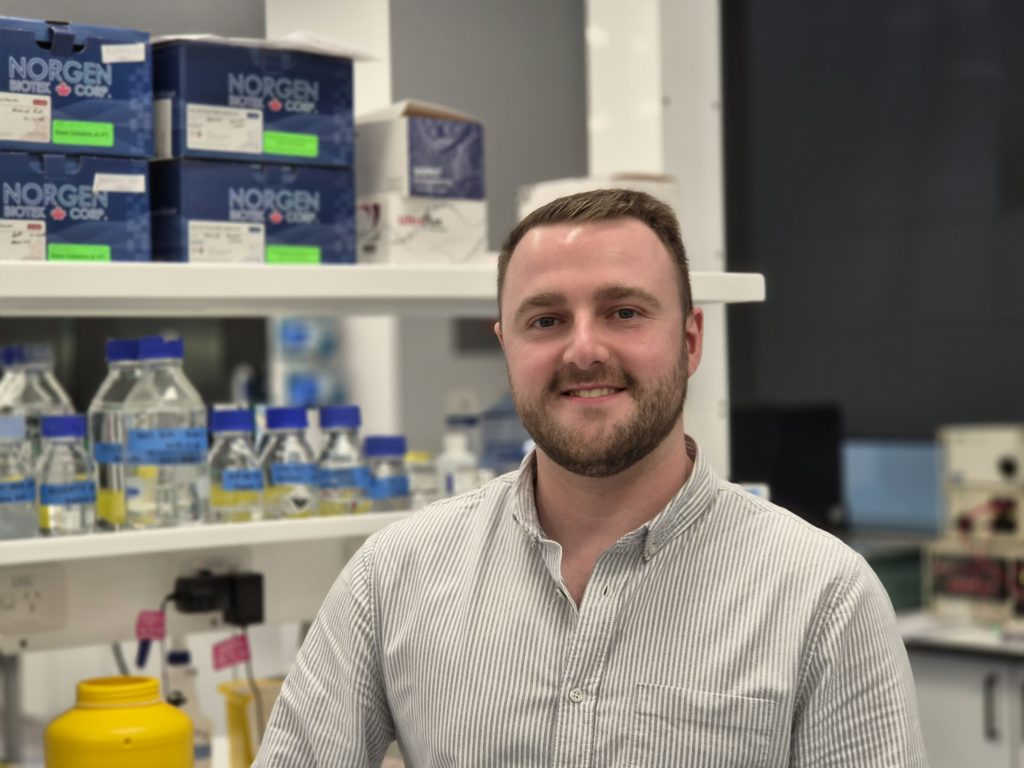
“By understanding why some patients respond differently to therapy, this research may lead to more effective, personalised melanoma treatments and improved patient outcomes in the future.” – Dr Douglas Gaskarth
Dr Douglas Gaskarth
Early Career Researcher Award
Monash University
While targeted therapy has significantly improved outcomes for people with advanced melanoma, biological males remain less likely to respond to treatment and to display poorer survival outcomes than females.
This project investigates why these differences occur by examining the role of the androgen receptor – a protein activated by male sex hormones such as testosterone – in driving resistance to MAPK inhibitors, a common targeted therapy for melanoma. Using advanced spectral flow cytometry, we will analyse how cancer cells, immune cells and surrounding support cells within the tumour microenvironment respond to treatment in both male and female melanoma models.
By identifying the cellular mechanisms that contribute to treatment resistance, we aim to uncover new therapeutic targets that could improve responses to therapy, reduce sex-based disparities in melanoma outcomes, and support the development of more personalised treatment for patients.

“My hope is that this research will contribute to a future where every patient with melanoma receives the treatment most likely to benefit them. By improving our understanding of how DNA methylation influences response and resistance to immunotherapy, this work aims to support more personalised treatment decisions and inform the development of new therapeutic strategies for patients who do not currently respond to existing therapies.” – Laura Smith
Laura Smith
Post Graduate Scholar Award
Melanoma Institute Australia
Immunotherapy has significantly improved outcomes for many people with melanoma, but challenges remain in predicting which patients will benefit most from treatment.
This project will investigate how DNA methylation, an epigenetic process that regulates gene activity, influences response and resistance to immunotherapy given before surgery (neoadjuvant immunotherapy) in people with stage III melanoma. By analysing tumour samples collected before and after treatment, researchers will map changes in DNA methylation across the genome and examine their impact on tumour biology.
The study aims to identify epigenetic signatures linked to treatment outcomes, improve our understanding of how melanoma evades the immune system, and identify candidate biomarkers and therapeutic targets. Ultimately, this research seeks to support more personalised treatment approaches and improve outcomes for people affected by melanoma.

I am honoured to be receiving this award and am extremely grateful to the Australian Melanoma Research Foundation for their support in this project. I hope that this research will provide us with new insights into how we can improve the outcome of melanoma patients treated with anti-PD-1 therapy.” – Rachael Stone
Rachael Stone
John Walter Holland Memorial Award
Adelaide University
While immune checkpoint inhibitors have transformed the treatment of advanced melanoma, many patients either do not respond or eventually develop resistance to these therapies. This project will investigate a specialised population of cancer-fighting immune cells known as cytotoxic CD8 T cells and explore how a molecule called CD15s helps these cells migrate from the bloodstream into tumours. Previous research has shown that patients with higher levels of CD15s on their T cells are significantly more likely to respond to immunotherapy and experience longer survival.
This study aims to understand how CD15s expression is regulated by examining the role of dendritic cells, which activate T cells, and the gut microbiome, which is increasingly recognised as an important influence on immune function. By uncovering the biological mechanisms that enhance T cell homing to tumours, this research seeks to identify new strategies to improve immunotherapy responses and increase the number of patients who benefit from treatment.