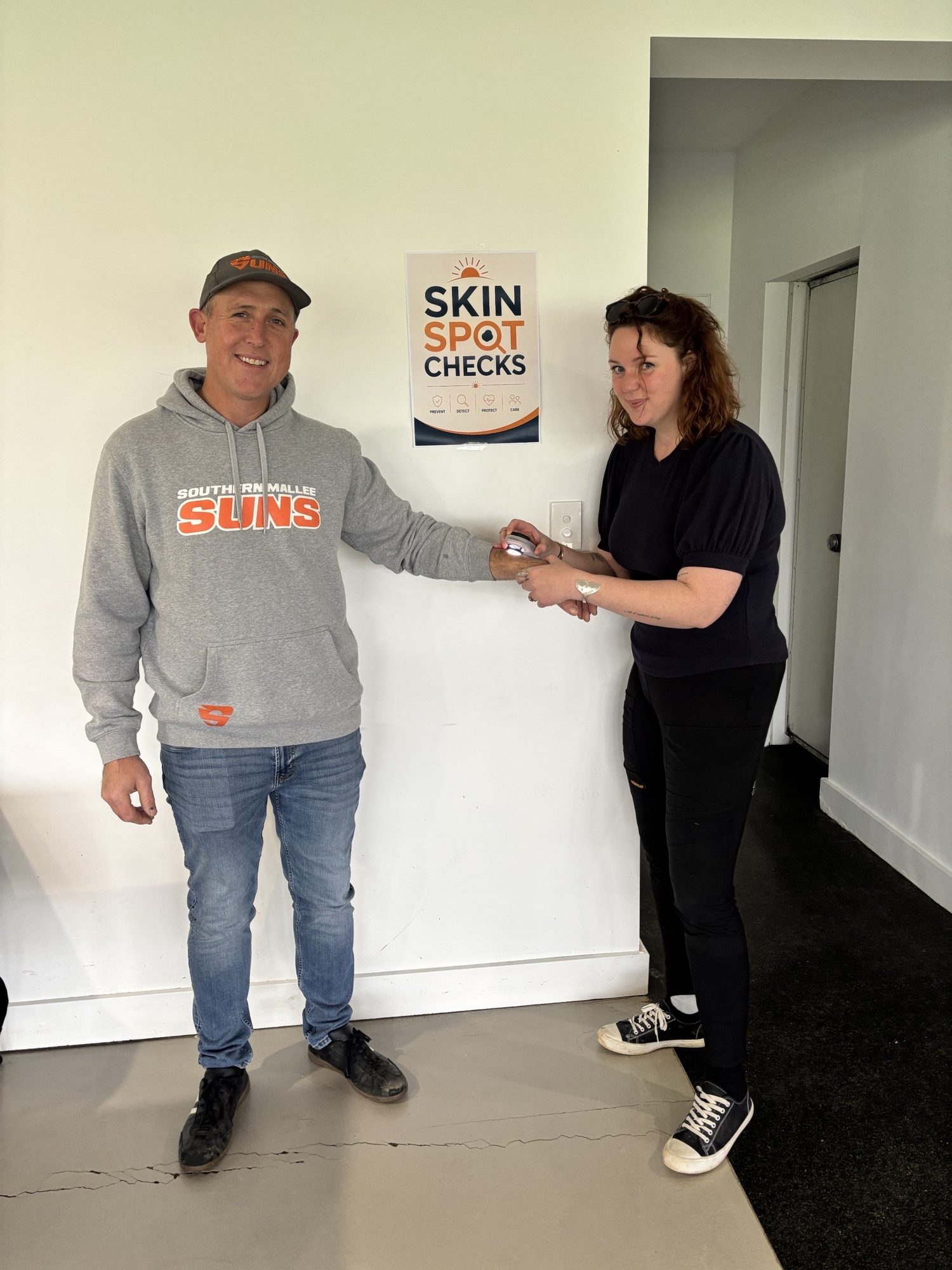
The Australian Melanoma Research Foundation (AMRF) recently returned to Lameroo, South Australia, as part of its Regional Skin Health & Early Detection Program, providing free skin spot checks and skin health education to local residents.
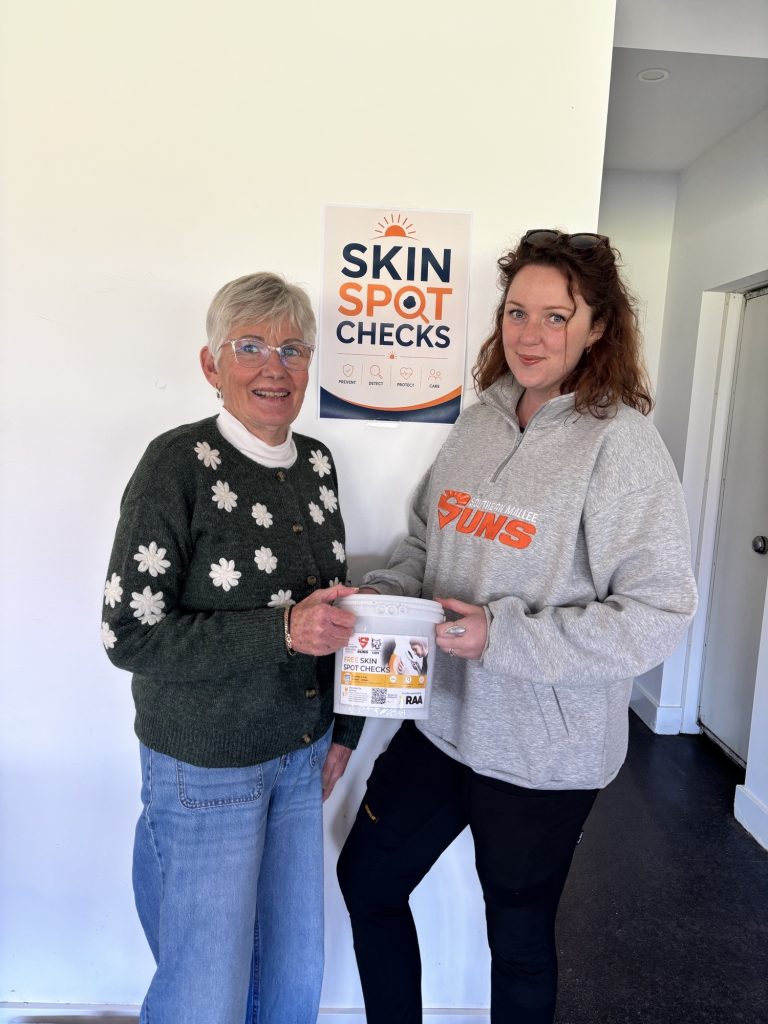
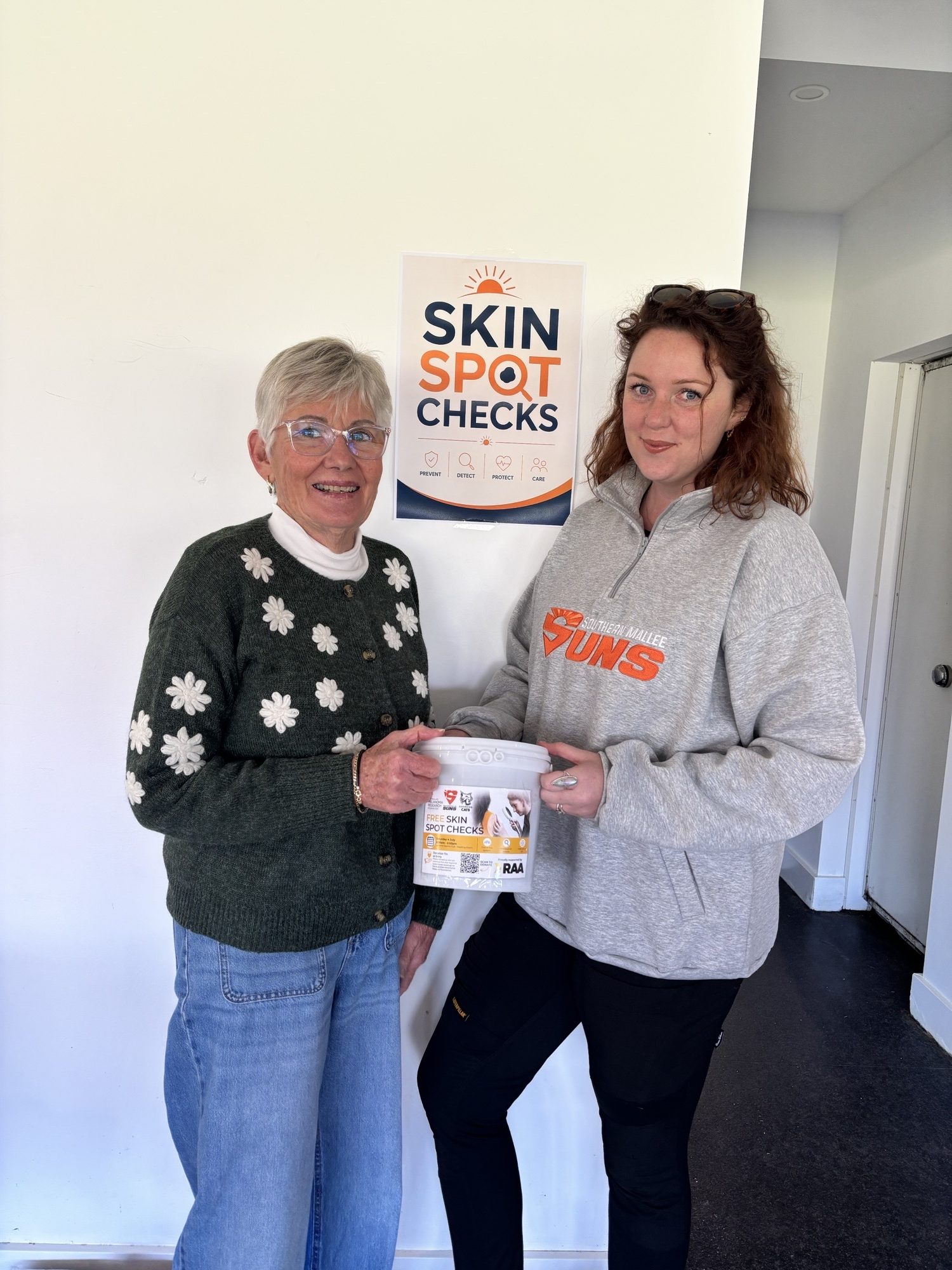
AMRF Ambassador Glenda Thomson and Skin Cancer Nurse Harriet Clayton.
“It was a pleasure to be able to bring such a valuable service to Lameroo on the weekend, the response was very positive and a few lesions of concern identified- a great experience all around.” – Harriet Clayton
Delivered by Skin Cancer Nurse Harriet Clayton, the program aims to improve access to early detection services in regional communities, where specialist skin cancer services can often be difficult to access.
The Lameroo clinic saw strong community participation, with 55 free skin spot checks conducted throughout the day.
The results highlight the importance of making skin health services available in regional Australia. Harriet reported:
55 people received a free skin spot check
9 people were referred for further medical assessment
9 non-melanoma skin lesions (including suspected basal cell and squamous cell carcinomas) were identified
2 dysplastic lesions or potential melanomas were identified and recommended for further investigation
While not all suspicious lesions will prove to be cancerous, identifying changes early and seeking prompt medical follow-up can significantly improve treatment outcomes.
Australia continues to have one of the highest rates of melanoma in the world, making awareness, prevention and early detection critical components of reducing the impact of skin cancer. Programs such as these help remove barriers to care and encourage people to take an active role in monitoring their skin health.
AMRF extends its sincere thanks to Skin Cancer Nurse Harriet Clayton, AMRF Ambassador Glenda Thomson the Southern Mallee Football and Netball Club, Coorong Cats and RAA of South Australia. Their support helps bring potentially life-saving skin checks and education to communities that need them most.
If you notice a new or changing spot on your skin, speak with your healthcare professional and arrange a skin check. Early detection saves lives.
Australian Melanoma Research Foundation (AMRF) respects and is committed to protecting the privacy of the people whose personal information it collects. We collect personal information about individuals who are employed by us, our donors, our volunteers, other supporters, allied associations, consultants and service providers.
Information we collect
Whenever we collect personal information, we will identify ourselves as AMRF and ensure people are aware of why we are collecting information and how we plan to use it.
The type of personal information AMRF usually collects and holds includes names, addresses, telephone numbers, email addresses, donation date, reason for donation, merchandise orders and other information such as health related information pertaining to AMRF research and program delivery. This information may be collected in person, via our website on the secure payment gateway, as well as other sources.
When people visit our website, or download information from it, the following information is recorded by Google Analytics:
Their network location and IP address
The date and time of their visit, pages visited, and time spent on each page
Referring site details (ie the site and page they came from to arrive at this site)
Type of web browser they used
Type of operating system they used
JavaScript support, screen resolution, and screen colour processing ability
This information is only used for statistical and website development purposes. We make limited use of cookies on our website. We use cookies to improve the functionality of our website, and to remember user preferences when people return.
In the event where an individual shares unsolicited personal information that AMRF would not have collected for the purposes outlined above that information will be destroyed or de-identified as soon as is practicable.
How we use and disclose personal information
We collect and use stakeholder’s personal information to carry out the functions and activities of AMRF and to comply with our legal obligations, to maintain and update our records and to help us manage and provide our services.
We may also use information to ask for support and to keep people informed about the ways in which our donors and supporters help us to make a difference to raise funds for research, awareness and early detection programs. People have the right to opt out of any communications from AMRF. This will not stop them receiving receipts and other transactional communications as required by law.
We may disclose personal information to third parties who assist us to perform functions on our behalf (such as commercial mail preparation services, this information is permanently deleted by the provider upon completion of the service and confirmed in writing of such). These external service providers are under a duty to maintain the privacy and security of your information in line with this Privacy Policy and to use your personal information only for the purpose for which it is disclosed.
AMRF does not use any government related identifiers, such as Medicare numbers or tax file numbers, of an individual as our own identifier.
Marketing and communications
We may use people’s information within AMRF only in connection with marketing and fundraising campaigns. We may provide marketing communications to stakeholders on an ongoing basis by telephone, electronic messages (eg. email), online (including websites and mobile apps) and other means, unless they opt out or we are subject to legal restrictions. These may include communications relating to AMRF and our programs, campaign and promotional messages, event invitations, fundraising opportunities and newsletters.
AMRF also sends transactional communications which include but are not limited to: Donation & Tax Receipts, forgotten password e-mails, event sign up confirmation and confirmations from Web forms.
To opt-out of receiving AMRF marketing communications people can:
Select the “unsubscribe” option in one of the marketing communications that they receive from us.
Send a written request to: PO Box 574, Kent Town DC SA 5071
Security of personal information
AMRF regards the security of personal information as a priority and takes a number of precautions to protect people’s personal information from loss, misuse, unauthorised access, modification or disclosure. Specific security precautions are in place for processing online payments through payment gateway providers Stripe and PayPal which include the use of encrypted links, dedicated private connections and Secure Sockets Layer (SSL) encryption. However, the Internet is not a secure environment and although all care is taken, we cannot guarantee the security of information people provide to us via electronic means such as email.
If people become aware of any inaccuracy in the personal information, we hold about themselves, they are encouraged to contact AMRF so we can update any personal information we hold.
Anonymity
Where it is lawful and practicable, we will allow individuals to deal with us on an anonymous basis. For example, if we receive a telephone enquiry, we will not require that the enquirer gives us their name, although depending on the nature of the enquiry, we may not be able to answer it unless they do.
We can also accept gifts and other forms of support anonymously. However, provisions contained in taxation legislation require AMRF to collect the name of the donor if the donor requires a tax-deductible receipt.
Image copyright
AMRF’s reputation and goodwill is extremely important. Permission to use images featured on this website has only been given to AMRF and therefore should not be downloaded or used in any way by a third party without consent.
If AMRF updates or changes this Privacy Policy, the changes will be made on this page. Your continued use of AMRF’s website following the posting of changes will mean you accept those changes.
Contact us
If you have any questions about privacy-related issues OR you wish to lodge a complaint about a breach of this policy OR other privacy matter OR you do not wish to be contacted by us to ask for your support, please contact us by email at admin@melanomaresearch.com.au. Alternatively our postal address is below:
AMRF PO Box 574 Kent Town DC SA 5071
We take your privacy concerns seriously. Where you express any concerns that we have interfered with your privacy, we will respond to let you know who will be handling your matter and when you can expect a further response. We may request additional details from you regarding your concerns and may need to engage or consult with other parties in order to investigate and deal with your issue. We will keep records of your request and any resolution.
For information about privacy generally, or if your concerns are not resolved to your satisfaction, you may contact the Office of the Australian Information Commissioner at www.oaic.gov.au and on 1300 363 992.