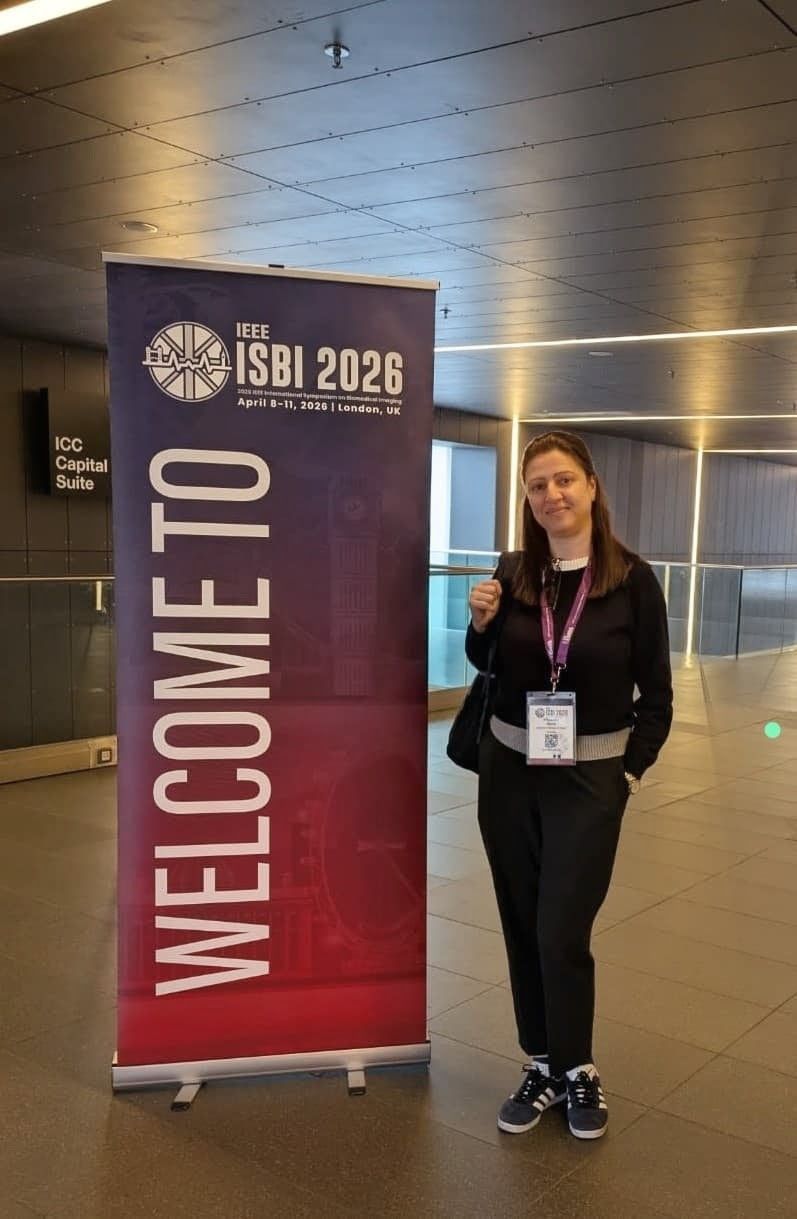
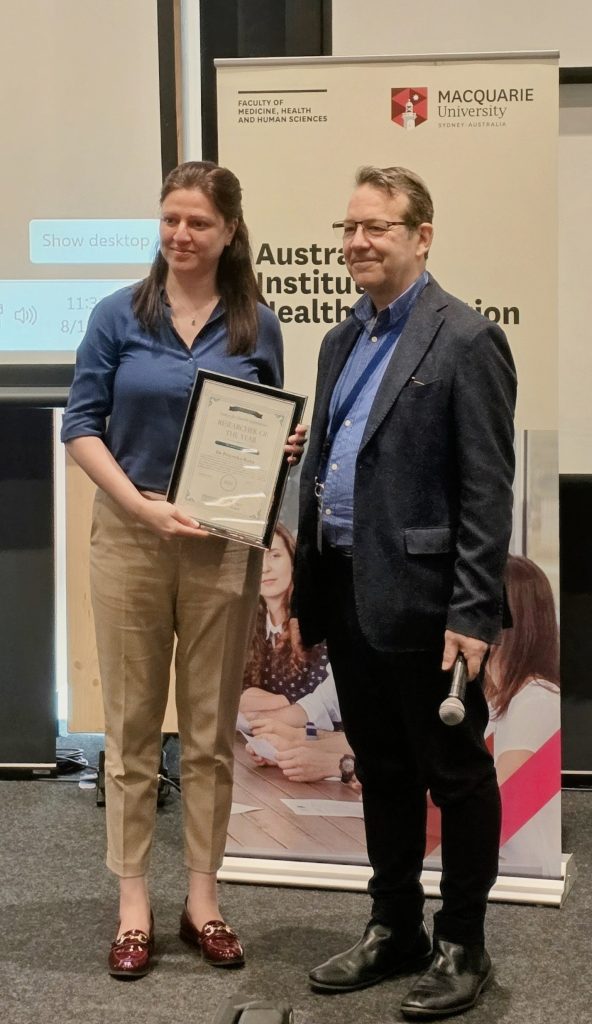



With a PhD in computer science and a focus on biomedical image analysis, Dr Priyanka Rana is bringing a data-driven approach to melanoma research at Macquarie University. Her work, in part funded by the Australian Melanoma Research Foundation, uses AI to identify patterns in melanoma tissue samples that can predict a patient’s response to immunotherapy; an advance that could significantly improve clinical decision-making. As this technology progresses, it has the potential to reshape how melanoma is treated, moving toward more personalised and effective care.
Can you tell us about your background and what led you to work at the intersection of artificial intelligence and melanoma research?
I’m a computer scientist by training, I completed my PhD in Computer Science from UNSW in 2023. My doctoral research focused on developing AI methods to analyse microscopic pathological images for a range of biomedical tasks, including cancer cell classification and protein localisation in subcellular environments, among others.
When I began my postdoctoral fellowship at the Centre for Health Informatics, Australian Institute of Health Innovation, Macquarie University, I was presented with an opportunity to work with pathological images sourced from the Melanoma Institute Australia. The project centred on predicting immunotherapy response in melanoma patients, a pursuit, I find both scientifically compelling and clinically meaningful, and it has remained the focus of my work for the past three years.
“The ultimate vision is a future where no patient undergoes a therapy that was never going to work for them, and treatment becomes truly personalised, sparing patients and their families unnecessary trauma, emotional burden, and financial cost.”
For those unfamiliar, how would you explain your AI-powered imaging research in simple terms?
In simple terms, we use AI to predict whether a patient will respond to immunotherapy before they undergo treatment. When tissue samples are stained with specific proteins, they reveal distinct visual patterns that differ between patients who respond well to immunotherapy and those who don’t. We train an AI model to recognise these patterns from pathological images, so that when presented with a new patient’s tissue sample, it can predict whether immunotherapy is likely to be effective.
This matters because up to ~60% of patients fail to respond to treatment. Early identification of non-responders is therefore critical to redirect them toward more effective alternative therapies, sparing them from debilitating side effects and unnecessary personal and financial burden.
How could this technology change the experience of someone diagnosed with melanoma?
Today, treatment decisions often involve trial and error, a patient may begin immunotherapy, endure weeks or months of debilitating side effects, only to find the treatment isn’t working. That experience can be physically exhausting, emotionally distressing, and financially costly.
This technology offers the ability to analyse a patient’s tissue sample at diagnosis and predict, using AI, whether immunotherapy is likely to benefit them. If identified early as a likely non-responder, their oncologist can immediately explore alternative therapies better suited to their biology, sparing them unnecessary suffering and delays in receiving effective treatment. For likely responders, it provides clinicians with greater confidence in their treatment plan and gives patients reassurance that the therapy they are undergoing is the right one for them.
“The path of research is rarely easy, long hours, setbacks, and moments of self-doubt, but when you recognise that your work could spare a patient and their family from unnecessary suffering, financial burden, and emotional trauma, every difficulty becomes worthwhile.”
Ultimately, this technology has the potential to make the treatment journey more personalised, more efficient, and far less burdensome, moving melanoma care toward precision medicine that puts the individual patient at the centre.
What does it mean to you personally to know your research could benefit someone’s treatment or outcome?
Knowing our research could genuinely benefit someone is the ultimate driving force. The path of research is rarely easy, long hours, setbacks, and moments of self-doubt, but when you recognise that your work could spare a patient and their family from unnecessary suffering, financial burden, and emotional trauma, every difficulty becomes worthwhile. There is no greater fulfilment. It is what gives this work its deepest purpose.
How close are we to seeing AI tools like yours used routinely in hospitals or clinics? Could this approach be applied to other cancers beyond melanoma?
We are making significant progress, but important steps remain before tools like this become routine in clinical settings, large-scale clinical validation, regulatory approval, and integration into existing workflows. The field is moving rapidly, however, and I am genuinely optimistic that AI-assisted pathology will become a meaningful part of clinical decision-making within the next five years.
What we are developing is built around the unique biology of melanoma and the detailed visual information captured by multiplex immunofluorescence imaging. While the approach may offer broader lessons for cancer care, our immediate focus is on delivering a reliable, clinician-ready tool where the need is greatest and our evidence base is strongest.
What has been the most rewarding part of your work so far? What keeps you going on the hard days?
Seeing our first framework published in the IEEE Journal of Biomedical and Health Informatics, a leading peer-reviewed journal, was genuinely rewarding. After rigorous review cycles, seeing that work validated and made openly accessible felt like a considerable milestone. It was the first tangible step toward our broader goal, and confirmation that we are on the right path.
On the hard days, I step back and remind myself of the purpose behind this work, what we are trying to achieve, and how meaningful it could be for patients and their families. That perspective never fails to re-centre me.
Looking ahead, what impact do you hope your research will have in the next 5-10 years?
In the next 5 to 10 years, I hope to see this research move from the lab into real clinical settings, where AI-assisted pathology becomes a routine part of treatment decision-making for melanoma patients. The immediate goal is to have a validated, clinically deployable tool that oncologists can trust and use with confidence.
The ultimate vision is a future where no patient undergoes a therapy that was never going to work for them, and treatment becomes truly personalised, sparing patients and their families unnecessary trauma, emotional burden, and financial cost.
“On the hard days, I step back and remind myself of the purpose behind this work, what we are trying to achieve, and how meaningful it could be for patients and their families. That perspective never fails to re-centre me.”
Australian Melanoma Research Foundation (AMRF) respects and is committed to protecting the privacy of the people whose personal information it collects. We collect personal information about individuals who are employed by us, our donors, our volunteers, other supporters, allied associations, consultants and service providers.
Whenever we collect personal information, we will identify ourselves as AMRF and ensure people are aware of why we are collecting information and how we plan to use it.
The type of personal information AMRF usually collects and holds includes names, addresses, telephone numbers, email addresses, donation date, reason for donation, merchandise orders and other information such as health related information pertaining to AMRF research and program delivery. This information may be collected in person, via our website on the secure payment gateway, as well as other sources.
When people visit our website, or download information from it, the following information is recorded by Google Analytics:
This information is only used for statistical and website development purposes. We make limited use of cookies on our website. We use cookies to improve the functionality of our website, and to remember user preferences when people return.
In the event where an individual shares unsolicited personal information that AMRF would not have collected for the purposes outlined above that information will be destroyed or de-identified as soon as is practicable.
We collect and use stakeholder’s personal information to carry out the functions and activities of AMRF and to comply with our legal obligations, to maintain and update our records and to help us manage and provide our services.
We may also use information to ask for support and to keep people informed about the ways in which our donors and supporters help us to make a difference to raise funds for research, awareness and early detection programs. People have the right to opt out of any communications from AMRF. This will not stop them receiving receipts and other transactional communications as required by law.
We may disclose personal information to third parties who assist us to perform functions on our behalf (such as commercial mail preparation services, this information is permanently deleted by the provider upon completion of the service and confirmed in writing of such). These external service providers are under a duty to maintain the privacy and security of your information in line with this Privacy Policy and to use your personal information only for the purpose for which it is disclosed.
AMRF does not use any government related identifiers, such as Medicare numbers or tax file numbers, of an individual as our own identifier.
We may use people’s information within AMRF only in connection with marketing and fundraising campaigns. We may provide marketing communications to stakeholders on an ongoing basis by telephone, electronic messages (eg. email), online (including websites and mobile apps) and other means, unless they opt out or we are subject to legal restrictions. These may include communications relating to AMRF and our programs, campaign and promotional messages, event invitations, fundraising opportunities and newsletters.
AMRF also sends transactional communications which include but are not limited to: Donation & Tax Receipts, forgotten password e-mails, event sign up confirmation and confirmations from Web forms.
To opt-out of receiving AMRF marketing communications people can:
AMRF regards the security of personal information as a priority and takes a number of precautions to protect people’s personal information from loss, misuse, unauthorised access, modification or disclosure. Specific security precautions are in place for processing online payments through payment gateway providers Stripe and PayPal which include the use of encrypted links, dedicated private connections and Secure Sockets Layer (SSL) encryption. However, the Internet is not a secure environment and although all care is taken, we cannot guarantee the security of information people provide to us via electronic means such as email.
If people become aware of any inaccuracy in the personal information, we hold about themselves, they are encouraged to contact AMRF so we can update any personal information we hold.
Where it is lawful and practicable, we will allow individuals to deal with us on an anonymous basis. For example, if we receive a telephone enquiry, we will not require that the enquirer gives us their name, although depending on the nature of the enquiry, we may not be able to answer it unless they do.
We can also accept gifts and other forms of support anonymously. However, provisions contained in taxation legislation require AMRF to collect the name of the donor if the donor requires a tax-deductible receipt.
AMRF’s reputation and goodwill is extremely important. Permission to use images featured on this website has only been given to AMRF and therefore should not be downloaded or used in any way by a third party without consent.
For information on obtaining permission for an image, please email admin@melanomaresearch.com.au.
If AMRF updates or changes this Privacy Policy, the changes will be made on this page. Your continued use of AMRF’s website following the posting of changes will mean you accept those changes.
If you have any questions about privacy-related issues OR you wish to lodge a complaint about a breach of this policy OR other privacy matter OR you do not wish to be contacted by us to ask for your support, please contact us by email at admin@melanomaresearch.com.au. Alternatively our postal address is below:
AMRF
PO Box 574
Kent Town DC SA 5071
We take your privacy concerns seriously. Where you express any concerns that we have interfered with your privacy, we will respond to let you know who will be handling your matter and when you can expect a further response. We may request additional details from you regarding your concerns and may need to engage or consult with other parties in order to investigate and deal with your issue. We will keep records of your request and any resolution.
For information about privacy generally, or if your concerns are not resolved to your satisfaction, you may contact the Office of the Australian Information Commissioner at www.oaic.gov.au and on 1300 363 992.