
What began as an ordinary training run quickly became something far more confronting for Australian Melanoma Research Foundation Ambassador, Fiona Kilby. In this interview, Fiona reflects on the moment her body signalled that something was wrong, just days before a life-shattering diagnosis of stage 4 metastatic melanoma. From emergency surgery and aggressive treatment to finding strength in community and rediscovering her stride, her story traces a path not unlike the trails she loves: unpredictable, challenging, and ultimately, profoundly transformative.
Can you take us back to that training run when you first noticed something wasn’t right: what was going through your mind at the time?
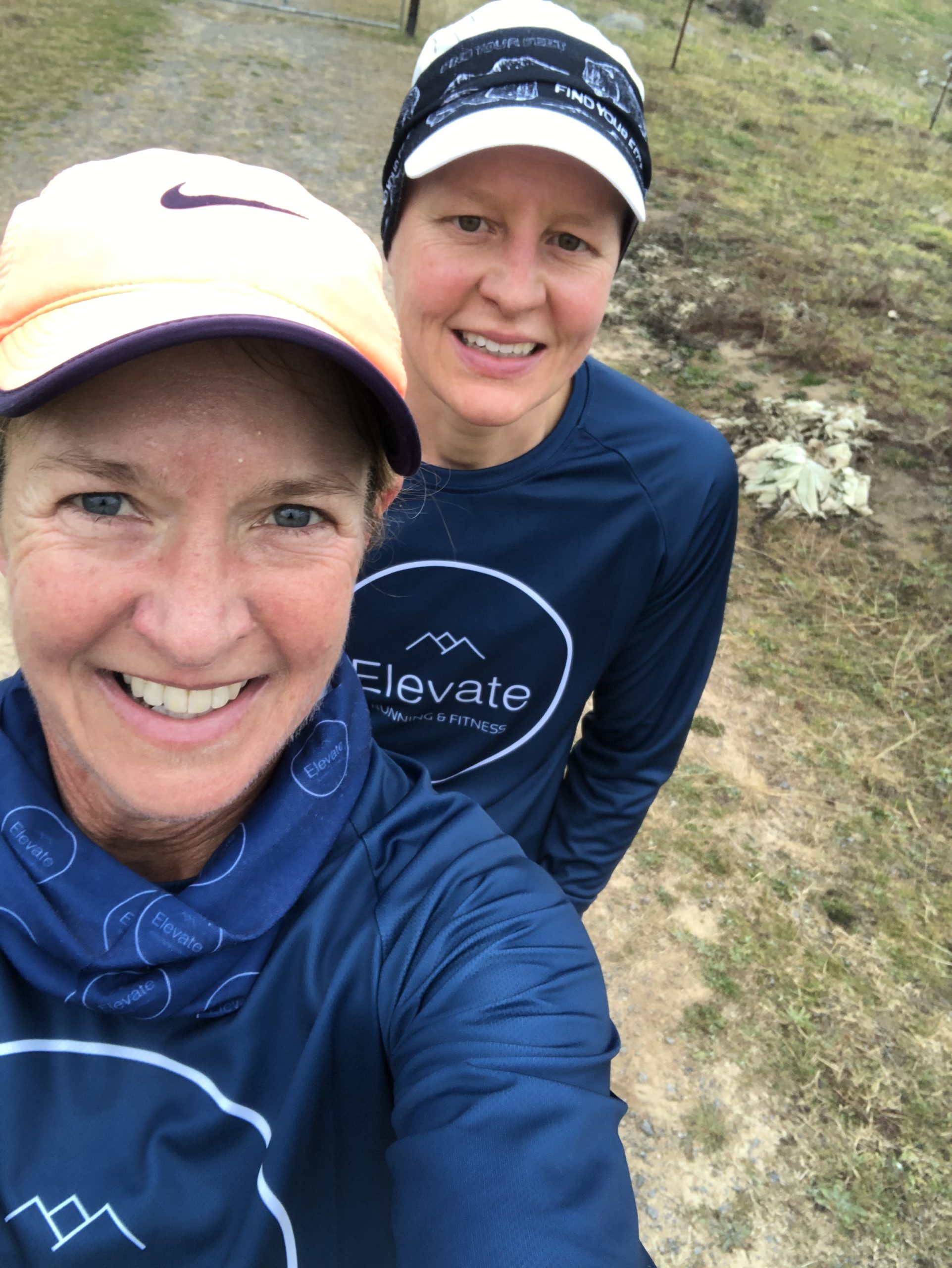
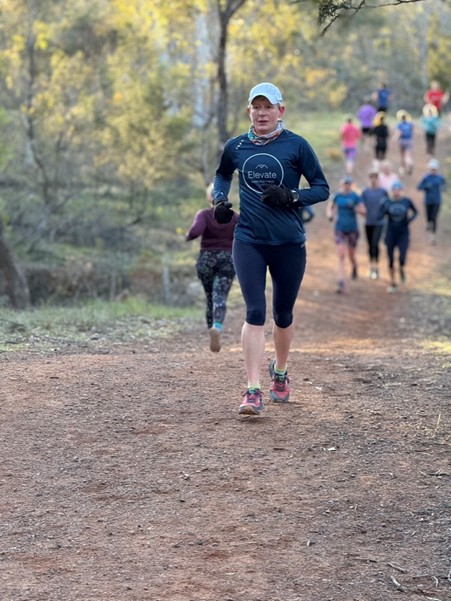
I think the look in my face in the photo my coach (and friend) took on the day, says it all! You can tell that something isn’t quite right. I was feeling unsettled and really unsure about what was happening. I remember that I had a telehealth appointment booked and another running friend that was with us, who had been a paramedic for more than 15 years, was encouraging me to see someone in person. They were both quite concerned about me.
What was it like to go from being a healthy, active runner to receiving a stage 4 metastatic melanoma diagnosis?
It was odd. And it was a shock, obviously. But really, it just didn’t sink in. I wasn’t able to fully grasp what this meant. My family and extended family were (are) all very healthy and there had never been a cancer diagnosis in the family.
“One of the reasons I enjoy trail running so much is the variety of landscapes you can cover….My recovery was similar. Every day was a little bit different.”
An advantage, if you can call it that, was that it all happened very quickly. The day of that social training run I ended up going to emergency, and a week later I was having my first craniotomy (the temporary removal of a piece of the skull to access the brain tissue) which involved a resection, a surgical procedure to remove a portion of the brain, usually to treat tumours. This was at the end of July 2020. By the end of August 2020, I was having my second surgery to remove more tumours because of the aggressive nature of the cancer.
I felt blessed and happy that I could still be physically active and I recall several friends visiting on regular days to “take me for a walk”.
What does “remission” look like for you in your day-to-day life now?
I’ve been in “remission” for a few years now and I am enjoying life and do all the things I was doing prior to the diagnosis in 2020. Even during my two years of immunotherapy, I continued to work and run.
A side-effect of the immunotherapy was developing drug-induced hypophysitis, also called hypopituitarism. My pituitary gland was affected and no longer sends signals to my adrenal glands to produce cortisol. Cortisol is a hormone that regulates metabolism, immune response, blood pressure, and sleep-wake cycles. It’s often called the “stress hormone”, as it increases energy availability during stressful events. Without the production of cortisol, I fatigue easily and require lifelong hormone replacement therapy (daily oral hydrocortisone).
You’ve compared your recovery to a trail run with ups and downs—can you expand on that metaphor?
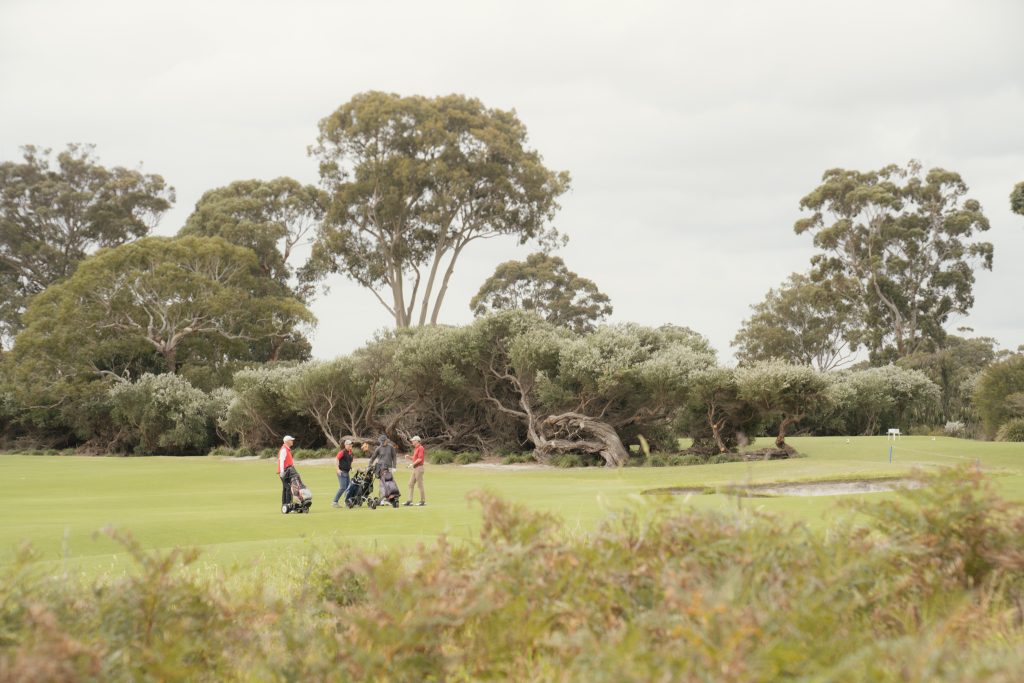
One of the reasons I enjoy trail running so much is the variety of landscapes you can cover. For example, in a single run you can run on smooth gravel fire trail, across dirt and grass, through water, up inclines, and down rocky single trail. It’s always changing.
My recovery was similar. Every day was a little bit different. Some days were smooth and comfortable, while other days were rough and rocky. Some days I felt terrible and wished it would end. Then a few days later I would feel well and it felt like I could take on the world!
Being significantly unwell, gives you considerable perspective. All those days in the past when you didn’t feel very well. That’s so very different to when your body is “sick”.
Has this experience changed how you see yourself: as an athlete, a mother, or a person?
Yes and no. I sometimes have to remind myself what happened six years ago.
“If it was not for organisations like the Australian Melanoma Research Foundation, I may not be able to say I am a melanoma survivor.”
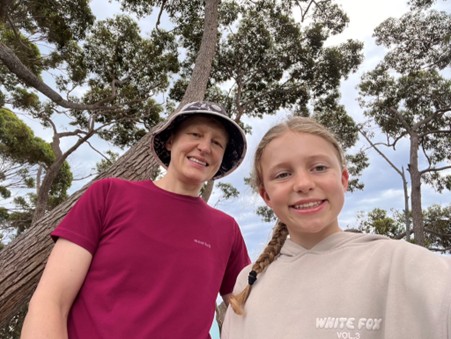
I think because I recovered very well, my life hasn’t significantly changed. I’m still running and exercising, I regularly walk with my kids and dogs, I work (not fulltime but more than I did prior to my diagnosis).
I consider myself very lucky and privileged to have survived melanoma, as I know there are a lot of people who haven’t had the experience I have.
You’ve described your trail running community as a “second family”—what role did they play during this time? Are you still active in this community now?
My trail running group, Elevate, was extremely supportive during the period I was diagnosed, having treatment and in recovery. My coach visited me weekly and walked with me – allowing me to talk about how I was feeling and filling me in on the happenings in our running group. She compiled messages of support from runners and sent them to me, including videos and songs. And when I was ready to return to running, I joined a group learning to run, and close running friends joined me for shorter distances and gradually longer distances and adventures, which I’m still enjoying today.
Elevate is truly a special community – supportive, encouraging, fun, real – and I love being a part of it.
“I want more Australians to live happy, healthy lives in harmony with our beautiful sun. To do that we need to encourage Australians to take simple steps to take care of their skin and to reduce their risk of getting melanomas.”
Why do you choose to support the Australian Melanoma Research Foundation and be an ambassador for prevention and early detection of melanoma?
If it was not for organisations like the Australian Melanoma Research Foundation, I may not be able to say I am a melanoma survivor. The Foundation plays a vital role in supporting innovative research into melanoma for better patient outcomes, including better treatments, earlier detection and ultimately, the prevention of melanoma.
Not all melanomas will present the same. To this day, my primary site has never been found. By the time I presented to emergency, the cancer had spread to my brain. My symptoms weren’t typical of melanoma. Perhaps if I had been more vigilant in having my skin checked regularly, there may have been the possibility of detecting the melanoma earlier. It may have been something on my skin that changed that I hadn’t noticed.
What are your hopes for the future of melanoma awareness and prevention?
I want more Australians to live happy, healthy lives in harmony with our beautiful sun. To do that we need to encourage Australians to take simple steps to take care of their skin and to reduce their risk of getting melanomas.
My hope is that in the future, our clever researchers and scientists have discovered more efficient tools to be able to detect melanoma and treat it. I’d like to see the rates of
- diagnosis drop – currently 1 in 17 Australians will be diagnosed with melanoma
- death drop – currently 1 person dies from melanoma in Australia every 6 hours
- detection increase – currently 90% of melanoma can be treated if detected early.
Maybe, in my lifetime, a cure for melanoma will be discovered… Until then, the Australian Melanoma Research Foundation continues to play a very important role in Australian society.