

When a routine skin check revealed melanoma in late 2025, it was a diagnosis that changed everything. Despite being diligent about annual skin checks for more than a decade, Samantha never expected to hear the words, “it’s melanoma.”
Today, while navigating the ongoing anxiety that can follow a cancer diagnosis, she is using her experience to raise awareness about the importance of early detection, sun safety, and melanoma research.
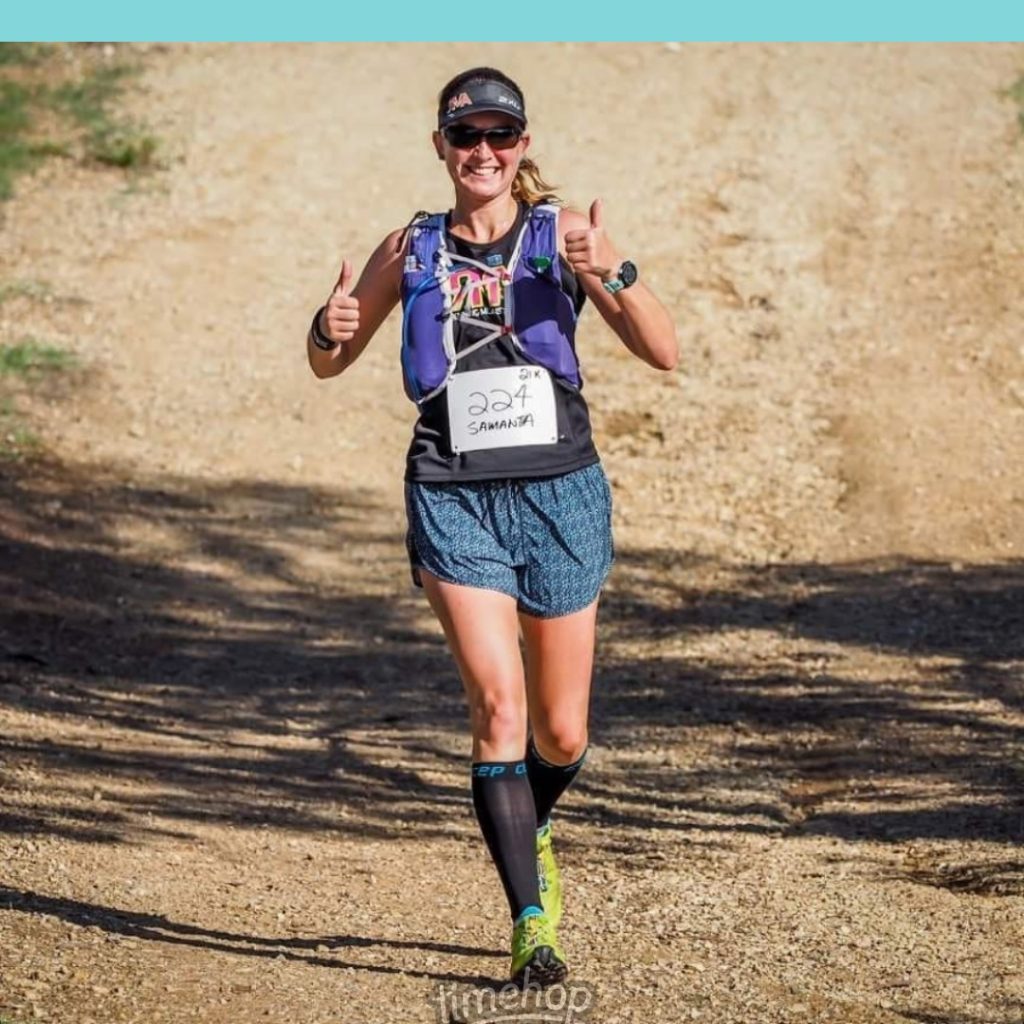
By taking on the Sydney Marathon and supporting the Australian Melanoma Research Foundation, she hopes her story will encourage Australians to prioritise skin checks and understand that melanoma can affect anyone.
Can you take us back to the moment you were diagnosed with melanoma in December 2025? What was going through your mind at the time? Had you always been conscious of melanoma and skin checks, or did your diagnosis change your perspective on skin health?
I have had yearly skin checks since 2013 due to starting a medication that had a side effect “beware of increased UV exposure.” I had a mole removed that had pre-melanoma cancer cells in it and this highlighted the importance of these checks. Fast forward to early 2025, I had changed skin cancer clinics as it was closer to home and it had been a few extra months over while waiting for my new appointment.
“I just had a feeling something wasn’t right. I couldn’t shake the feeling and then I received the phone call: “it is melanoma cancer, and we need you to come back’.”
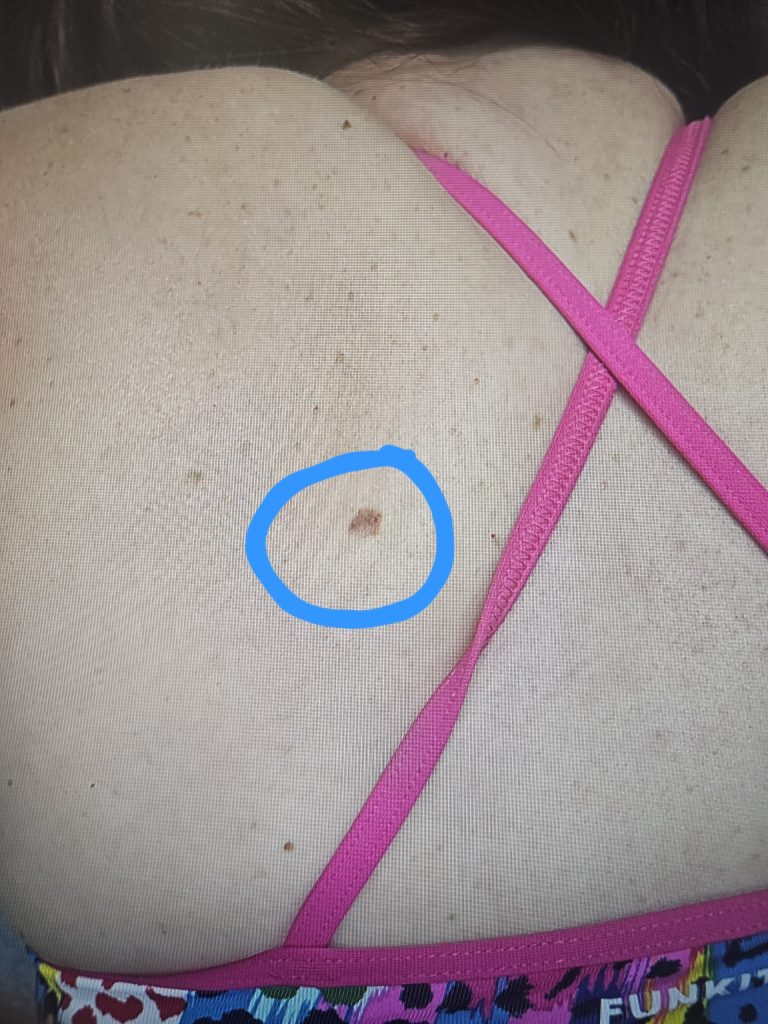
I was asked about a blemish on my back that I had never been asked about before. We watched it for 4 months. It was shaved, biopsied as it had changed. I just had a feeling something wasn’t right. I couldn’t shake the feeling and then I received the phone call: “it is melanoma cancer, and we need you to come back’. It was explained the procedure as a wide long excision where they take extra margins to ensure they get surrounding cells.
Waiting for the day of the surgery was hard, it was hard not to imagine it spreading. Surgery was performed and 11 stitches later in my left shoulder blade and I had some relief that it was out and a week later confirmed they were confident they had removed it all.
It was such a relief to know that they had got it all but then fear of it returning brings its own challenges, that I think will never really go away. I was also making others be more sun smart, skin conscious and now they have to hear it even more from me, but if that saves more lives, then I will keep asking “do you have sunscreen on?”
You mentioned you’ve been NED since your treatment — how has that shaped the way you approach life now?
I will be honest, there comes an anxiety thinking of not if but when will it return. This is something that I have been working through with support from the Melanoma Patients Australia Nurse counsellors. I wish it was as easy as thinking “well it’s been cut out now, it’s all ok” but your mind thinks differently “what if it is missed at the next skin check’ what if that extra 15 mins without sun protection has caused another melanoma. But in the next breath, I feel lucky that I kept up my yearly skin checks as it may have been a different outcome.
“Since my diagnosis there has been a great support network, and [the Australian Melanoma Research Foundation] is one part of that network. I want to give support where research can help others in the future.”
What inspired you to take on the Sydney Marathon this year? Has your diagnosis changed your relationship with running, fitness or the outdoors?
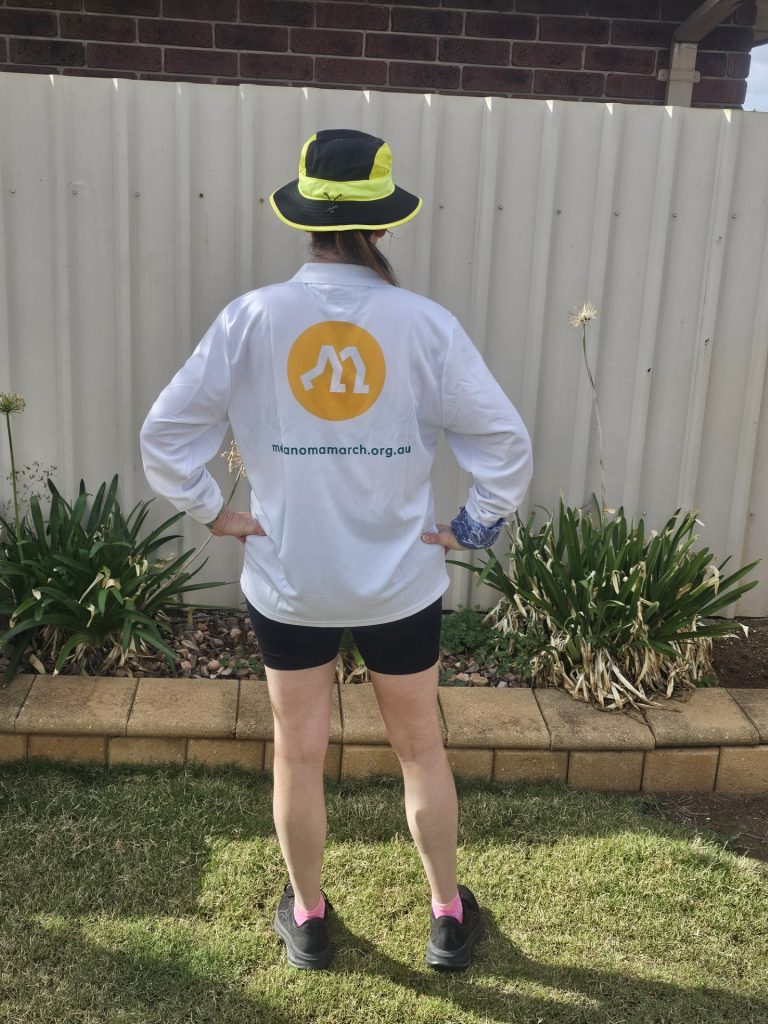
Running is something that I love and when I saw an opportunity to raise awareness and show that we can be sun smart and still be outdoors, I jumped at the chance. My relationship with the outdoors has changed for sure, I have always been sun smart but now I am extra cautious, long sleeves, bucket hat, wide brim hat.
I have the SunSmart app on my phone and check the UV levels before heading outside. I think this is something I will always be conscious of, I think it now comes with the anxiety of trying to live in our great outdoors but also be aware of sun protection.
“[The Melanoma March] gave melanoma and skin cancer a physical presence if that makes sense. To see so many people impacted themselves or having support there.”
What was it like attending your first Melanoma March at Henley Beach?
Honestly it was emotional. It gave melanoma and skin cancer a physical presence if that makes sense. To see so many people impacted themselves or having support there. My family attended with me and it made me feel grateful to bring and share awareness.
Why do you choose to support the Australian Melanoma Research Foundation?
Since my diagnosis there has been a great support network, and this is one part of that network. I want to give support where research can help others in the future.
What advice would you give to other Australians who may not think melanoma could affect them?
It could easily be missed. So please be vigilant with your skin checks even if you think you don’t need one. And apply sunscreen even in the car! There has been too many lives lost already because they thought ‘it won’t happen to me’
Australian Melanoma Research Foundation (AMRF) respects and is committed to protecting the privacy of the people whose personal information it collects. We collect personal information about individuals who are employed by us, our donors, our volunteers, other supporters, allied associations, consultants and service providers.
Whenever we collect personal information, we will identify ourselves as AMRF and ensure people are aware of why we are collecting information and how we plan to use it.
The type of personal information AMRF usually collects and holds includes names, addresses, telephone numbers, email addresses, donation date, reason for donation, merchandise orders and other information such as health related information pertaining to AMRF research and program delivery. This information may be collected in person, via our website on the secure payment gateway, as well as other sources.
When people visit our website, or download information from it, the following information is recorded by Google Analytics:
This information is only used for statistical and website development purposes. We make limited use of cookies on our website. We use cookies to improve the functionality of our website, and to remember user preferences when people return.
In the event where an individual shares unsolicited personal information that AMRF would not have collected for the purposes outlined above that information will be destroyed or de-identified as soon as is practicable.
We collect and use stakeholder’s personal information to carry out the functions and activities of AMRF and to comply with our legal obligations, to maintain and update our records and to help us manage and provide our services.
We may also use information to ask for support and to keep people informed about the ways in which our donors and supporters help us to make a difference to raise funds for research, awareness and early detection programs. People have the right to opt out of any communications from AMRF. This will not stop them receiving receipts and other transactional communications as required by law.
We may disclose personal information to third parties who assist us to perform functions on our behalf (such as commercial mail preparation services, this information is permanently deleted by the provider upon completion of the service and confirmed in writing of such). These external service providers are under a duty to maintain the privacy and security of your information in line with this Privacy Policy and to use your personal information only for the purpose for which it is disclosed.
AMRF does not use any government related identifiers, such as Medicare numbers or tax file numbers, of an individual as our own identifier.
We may use people’s information within AMRF only in connection with marketing and fundraising campaigns. We may provide marketing communications to stakeholders on an ongoing basis by telephone, electronic messages (eg. email), online (including websites and mobile apps) and other means, unless they opt out or we are subject to legal restrictions. These may include communications relating to AMRF and our programs, campaign and promotional messages, event invitations, fundraising opportunities and newsletters.
AMRF also sends transactional communications which include but are not limited to: Donation & Tax Receipts, forgotten password e-mails, event sign up confirmation and confirmations from Web forms.
To opt-out of receiving AMRF marketing communications people can:
AMRF regards the security of personal information as a priority and takes a number of precautions to protect people’s personal information from loss, misuse, unauthorised access, modification or disclosure. Specific security precautions are in place for processing online payments through payment gateway providers Stripe and PayPal which include the use of encrypted links, dedicated private connections and Secure Sockets Layer (SSL) encryption. However, the Internet is not a secure environment and although all care is taken, we cannot guarantee the security of information people provide to us via electronic means such as email.
If people become aware of any inaccuracy in the personal information, we hold about themselves, they are encouraged to contact AMRF so we can update any personal information we hold.
Where it is lawful and practicable, we will allow individuals to deal with us on an anonymous basis. For example, if we receive a telephone enquiry, we will not require that the enquirer gives us their name, although depending on the nature of the enquiry, we may not be able to answer it unless they do.
We can also accept gifts and other forms of support anonymously. However, provisions contained in taxation legislation require AMRF to collect the name of the donor if the donor requires a tax-deductible receipt.
AMRF’s reputation and goodwill is extremely important. Permission to use images featured on this website has only been given to AMRF and therefore should not be downloaded or used in any way by a third party without consent.
For information on obtaining permission for an image, please email admin@melanomaresearch.com.au.
If AMRF updates or changes this Privacy Policy, the changes will be made on this page. Your continued use of AMRF’s website following the posting of changes will mean you accept those changes.
If you have any questions about privacy-related issues OR you wish to lodge a complaint about a breach of this policy OR other privacy matter OR you do not wish to be contacted by us to ask for your support, please contact us by email at admin@melanomaresearch.com.au. Alternatively our postal address is below:
AMRF
PO Box 574
Kent Town DC SA 5071
We take your privacy concerns seriously. Where you express any concerns that we have interfered with your privacy, we will respond to let you know who will be handling your matter and when you can expect a further response. We may request additional details from you regarding your concerns and may need to engage or consult with other parties in order to investigate and deal with your issue. We will keep records of your request and any resolution.
For information about privacy generally, or if your concerns are not resolved to your satisfaction, you may contact the Office of the Australian Information Commissioner at www.oaic.gov.au and on 1300 363 992.