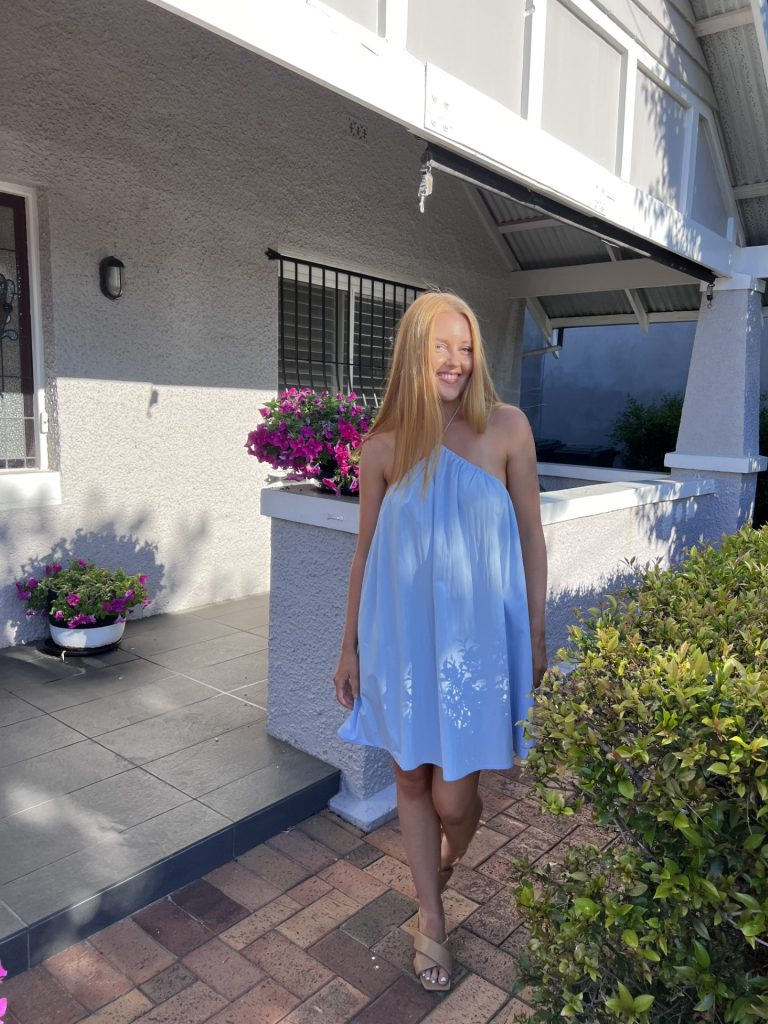

At just 23, Holly never imagined she would be facing a melanoma diagnosis. Living an active, social life and building a career in events and marketing, she had always considered herself healthy and low-risk. But that belief quickly changed as her melanoma journey took her on an unexpected journey through surgery, treatment, and recovery. In this interview, Holly shares her story to raise awareness about the realities of melanoma, especially for young people, and why taking your health seriously, no matter your age, can make all the difference.
Can you tell us a bit about yourself and your life before your melanoma diagnosis?
I am 23 years old (turning 24 on the 27th April!), originally born in the UK and moved to Australia at the age of 9 with my parents and younger brother. I grew up with a sporty family, and I spent most of my young and teen years either swimming, or playing netball. My dad and brother play and coach soccer, which means my mum and I love to spend the season on the sidelines cheering them on and be a part of the club’s community vibe. I have always had an active and healthy lifestyle.
“You really only take your health seriously until you’re put in a confronting situation, which I really wish wasn’t the case.”
I love spending my weekends going for walks with my best friend, getting breakfast at my local cafe, spending time with my boyfriend, shopping, going out for dinner. I also love to travel, whether it’s overseas to Europe, visiting my family in the UK or interstate!
Prior to my melanoma diagnosis, I had never had any health concerns and neither had anyone in my immediate family, so when I got the diagnosis, it definitely came as a shock to the system, not only for me but also to my family. I think I also always had this perception that because I am young, fit and healthy, that nothing like this would happen to me and I now really hate that mentality that I know a lot of other young people also have. You really only take your health seriously until you’re put in a confronting situation, which I really wish wasn’t the case.
How did you first discover something wasn’t right? And what did the journey look like from there?
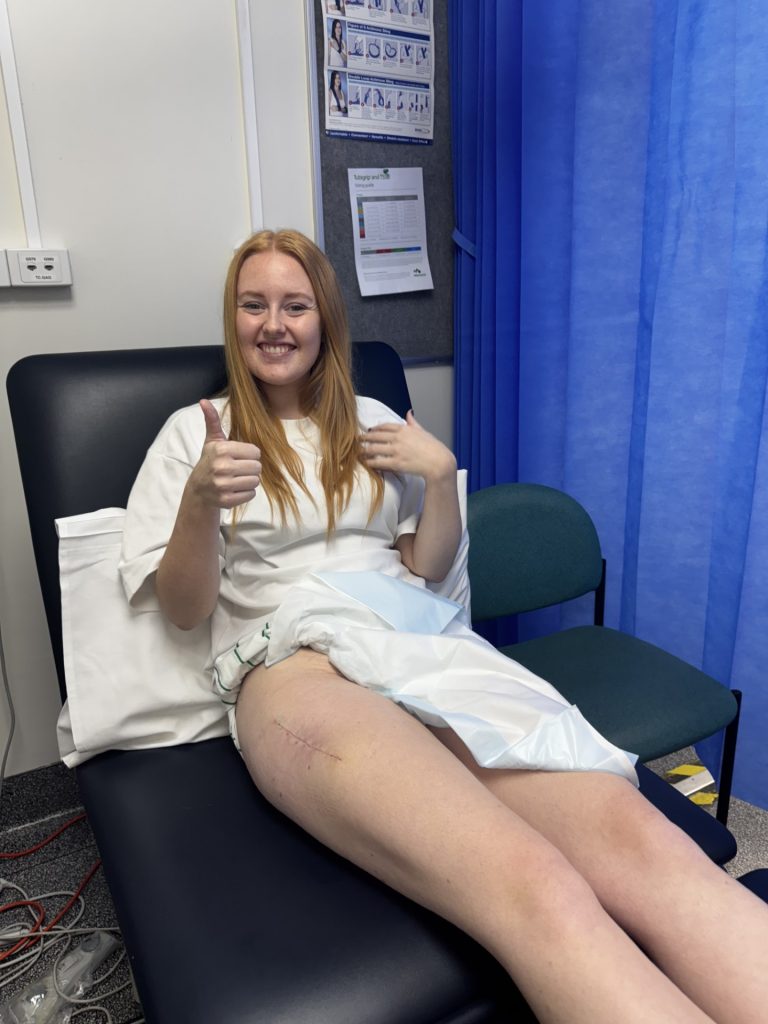
In 2024, I noticed this particular mole on my upper right thigh had changed in appearance. It had raised above the skin and became much darker in colour with an outer texture. This was the first sign to me that something wasn’t right, as this hadn’t happened to any of the other freckles or moles on my body.
Although I was aware of the change, I had the messages in my head of “I’m sure it’s fine“, “It can’t be anything bad, I’m only young”, “I’ll get booked into the GP when I have time“.
And it wasn’t until I told my mum over a week later about it, that she told me I must get booked into the GP as soon as possible to get it seen to.
After seeing the first GP I could get into, she booked me in for an urgent referral to another GP in the clinic that specialises in skin cancer – and this second GP immediately let me know that it needed to be removed and sent off for a biopsy as soon as possible, as she said it “doesn’t look great”, with results coming back to show it was melanoma.
The next appointment was with the plastic surgeons to discuss having the wide-local excision surgery to remove more of the area in case of potential further spreading. When the scan results came back, it showed suspicious activity in the groin area.
Results showed a small amount had spread to one of the lymph nodes, and therefore I would be meeting with a medical oncologist to discuss treatment options.
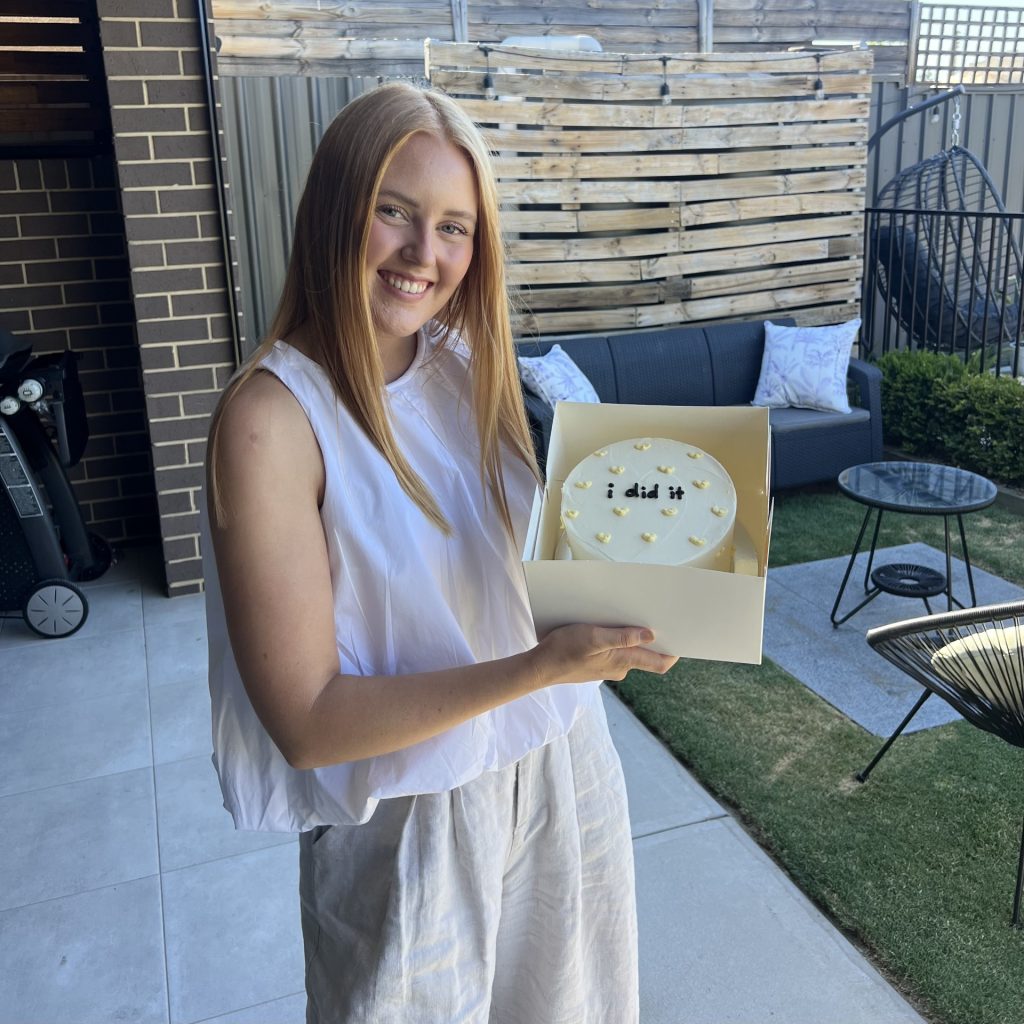
I was diagnosed with Stage 3B Melanoma and put on a 12-month Target Therapy treatment plan. I was on targeted therapy medication daily from late December 2024 until early January 2026, with monthly blood tests and oncology appointments, 3-monthly CT scans. I have now finished up the treatment and have 4-monthly CT scans and skin checks with the dermatologist. Grateful that all scans have been clear and things are going well since stopping the medication!
“When I first started telling people about my diagnosis, a lot of people would respond with things like “well it’s been removed so why are you still upset”. Yet for so many melanoma patients the removal surgery is only the beginning of the journey ahead.
Why do you think awareness about melanoma is so important?
I think awareness about melanoma is super important, especially as I feel as though it doesn’t get the same “serious” message that other types of cancers do. I get the impression that a lot of people assume that melanoma is just something that once the primary spot is removed, nothing else can happen. There’s a strong idea that if you have cancer, you should look physically unwell or experience hair loss, yet with melanoma often the scars are hidden.
Something that really stuck with me is when I first started telling people about my diagnosis, a lot of people would respond with things like “oh yeah my relative had 5 removed and they’re fine“, “well it’s been removed so why are you still upset”, “it’s only skin cancer, at least it’s not a more serious type of cancer“.
Yet for so many melanoma patients the removal surgery is only the beginning of the journey ahead.
To be made to feel alone and not worthy of your emotions when going through something so daunting and scary, shows that there is not enough awareness about melanoma as a whole.
Having experienced this at a young age, I quickly noticed that a lot of the awareness campaigns are targeted at an older demographic or specific to people who are always out in the sun. It would be great to see more campaigns targeting the younger demographics, and the effects of continuous sun exposure, from a young age, that can cause a build-up of damage to the skin.
On social media I see a lot of “influencers” and even just everyday people that I follow, posting to their followers glamorising sun tanning or getting inundated with compliments for being tanned or showing themselves laying in the sun at the beach glistening in tanning oils. It really shows that a lot of young people aren’t aware or don’t understand the dangers or lasting effects that can happen later in life from sun tanning.
“I choose to raise funds for the Australian Melanoma Research Foundation as I strongly support their initiative to continue extensive research with the vision that there will be a world without melanoma.”
What does “making a difference” mean to you personally? Why do you choose to raise funds for the Australian Melanoma Research Foundation?
For me, making a difference is spreading a message that is going to make them stop and think. There are plenty of campaigns, or ads around that often show an older person, someone with fair skin, light coloured hair or eyes and it leaves a lot of the population out of the equation, and they likely ignore it or think “that’s not what I look like or what I do so I’m all good” or “I don’t sit in the sun” or “I wear sunscreen so it won’t happen to me”.
A lot of people only listen or take a health-related messages seriously when they can relate directly to it and I think we need to make a difference in changing that!
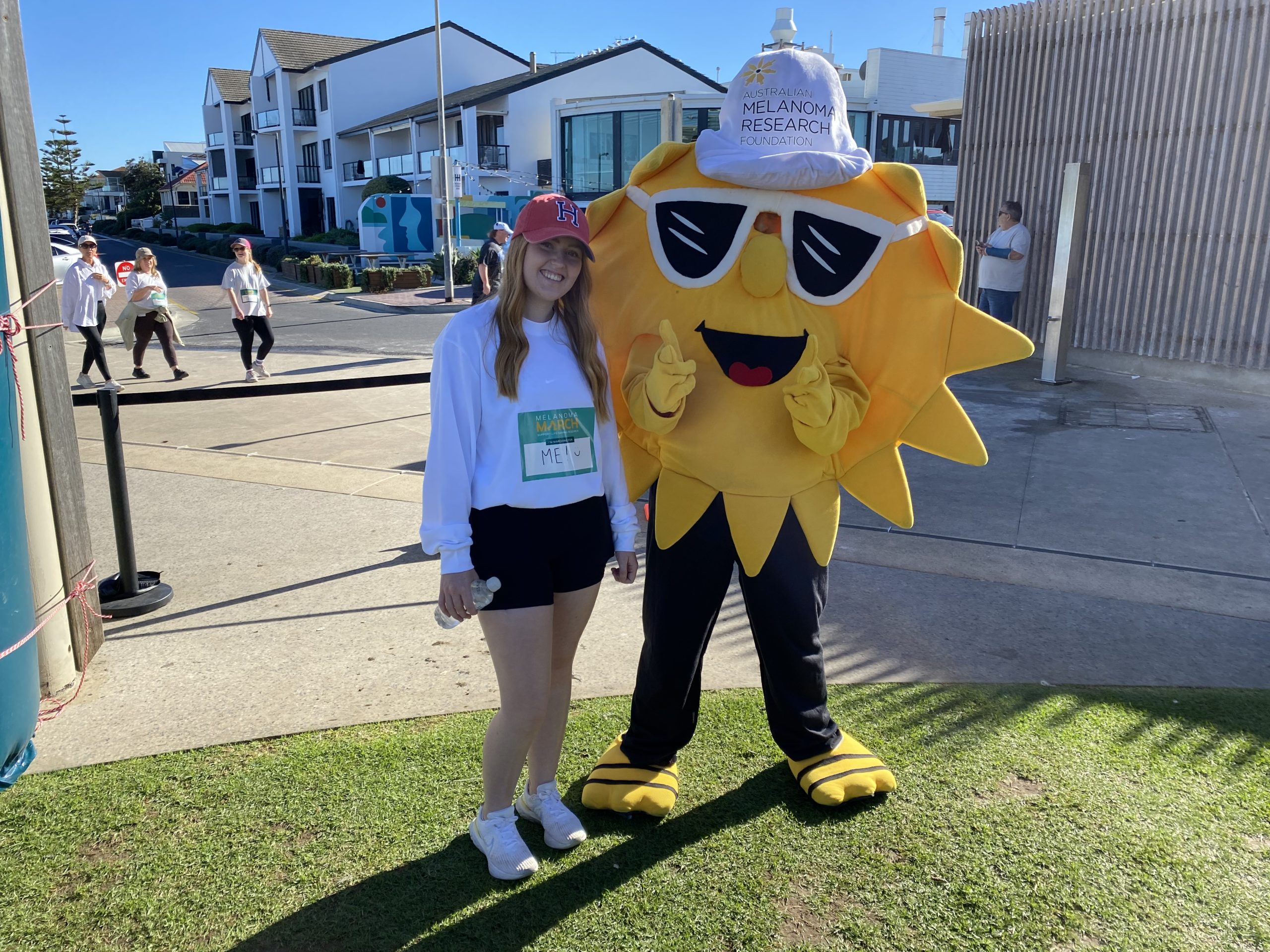
I choose to raise funds for the Australian Melanoma Research Foundation as I strongly support their initiative to continue extensive research with the vision that there will be a world without melanoma. Through more fundraising and awareness, the more resources and time can be allocated to finding a way of there being a world without melanoma.
What advice would you give to others reading your story?
My advice to anyone who’s reading my story or has been affected by melanoma – you are not alone, take your health seriously and if you notice any change, get it checked! Just like you go to your dentist appointment every few months, book in for a skin check every year! It’s just as important and could be the check that saves your life.
Australian Melanoma Research Foundation (AMRF) respects and is committed to protecting the privacy of the people whose personal information it collects. We collect personal information about individuals who are employed by us, our donors, our volunteers, other supporters, allied associations, consultants and service providers.
Whenever we collect personal information, we will identify ourselves as AMRF and ensure people are aware of why we are collecting information and how we plan to use it.
The type of personal information AMRF usually collects and holds includes names, addresses, telephone numbers, email addresses, donation date, reason for donation, merchandise orders and other information such as health related information pertaining to AMRF research and program delivery. This information may be collected in person, via our website on the secure payment gateway, as well as other sources.
When people visit our website, or download information from it, the following information is recorded by Google Analytics:
This information is only used for statistical and website development purposes. We make limited use of cookies on our website. We use cookies to improve the functionality of our website, and to remember user preferences when people return.
In the event where an individual shares unsolicited personal information that AMRF would not have collected for the purposes outlined above that information will be destroyed or de-identified as soon as is practicable.
We collect and use stakeholder’s personal information to carry out the functions and activities of AMRF and to comply with our legal obligations, to maintain and update our records and to help us manage and provide our services.
We may also use information to ask for support and to keep people informed about the ways in which our donors and supporters help us to make a difference to raise funds for research, awareness and early detection programs. People have the right to opt out of any communications from AMRF. This will not stop them receiving receipts and other transactional communications as required by law.
We may disclose personal information to third parties who assist us to perform functions on our behalf (such as commercial mail preparation services, this information is permanently deleted by the provider upon completion of the service and confirmed in writing of such). These external service providers are under a duty to maintain the privacy and security of your information in line with this Privacy Policy and to use your personal information only for the purpose for which it is disclosed.
AMRF does not use any government related identifiers, such as Medicare numbers or tax file numbers, of an individual as our own identifier.
We may use people’s information within AMRF only in connection with marketing and fundraising campaigns. We may provide marketing communications to stakeholders on an ongoing basis by telephone, electronic messages (eg. email), online (including websites and mobile apps) and other means, unless they opt out or we are subject to legal restrictions. These may include communications relating to AMRF and our programs, campaign and promotional messages, event invitations, fundraising opportunities and newsletters.
AMRF also sends transactional communications which include but are not limited to: Donation & Tax Receipts, forgotten password e-mails, event sign up confirmation and confirmations from Web forms.
To opt-out of receiving AMRF marketing communications people can:
AMRF regards the security of personal information as a priority and takes a number of precautions to protect people’s personal information from loss, misuse, unauthorised access, modification or disclosure. Specific security precautions are in place for processing online payments through payment gateway providers Stripe and PayPal which include the use of encrypted links, dedicated private connections and Secure Sockets Layer (SSL) encryption. However, the Internet is not a secure environment and although all care is taken, we cannot guarantee the security of information people provide to us via electronic means such as email.
If people become aware of any inaccuracy in the personal information, we hold about themselves, they are encouraged to contact AMRF so we can update any personal information we hold.
Where it is lawful and practicable, we will allow individuals to deal with us on an anonymous basis. For example, if we receive a telephone enquiry, we will not require that the enquirer gives us their name, although depending on the nature of the enquiry, we may not be able to answer it unless they do.
We can also accept gifts and other forms of support anonymously. However, provisions contained in taxation legislation require AMRF to collect the name of the donor if the donor requires a tax-deductible receipt.
AMRF’s reputation and goodwill is extremely important. Permission to use images featured on this website has only been given to AMRF and therefore should not be downloaded or used in any way by a third party without consent.
For information on obtaining permission for an image, please email admin@melanomaresearch.com.au.
If AMRF updates or changes this Privacy Policy, the changes will be made on this page. Your continued use of AMRF’s website following the posting of changes will mean you accept those changes.
If you have any questions about privacy-related issues OR you wish to lodge a complaint about a breach of this policy OR other privacy matter OR you do not wish to be contacted by us to ask for your support, please contact us by email at admin@melanomaresearch.com.au. Alternatively our postal address is below:
AMRF
PO Box 574
Kent Town DC SA 5071
We take your privacy concerns seriously. Where you express any concerns that we have interfered with your privacy, we will respond to let you know who will be handling your matter and when you can expect a further response. We may request additional details from you regarding your concerns and may need to engage or consult with other parties in order to investigate and deal with your issue. We will keep records of your request and any resolution.
For information about privacy generally, or if your concerns are not resolved to your satisfaction, you may contact the Office of the Australian Information Commissioner at www.oaic.gov.au and on 1300 363 992.